When we decided to add pictures to poetry
Here’s a question: when you read a poem, where does it live?
In your head, surely. But also somewhere in that fuzzy space between your imagination and your memory, between what the poet said and what your brain decided to do with it.
Now, what happens when someone adds visuals to those words? Or music?
Does the poem change address?
Does it move house entirely?
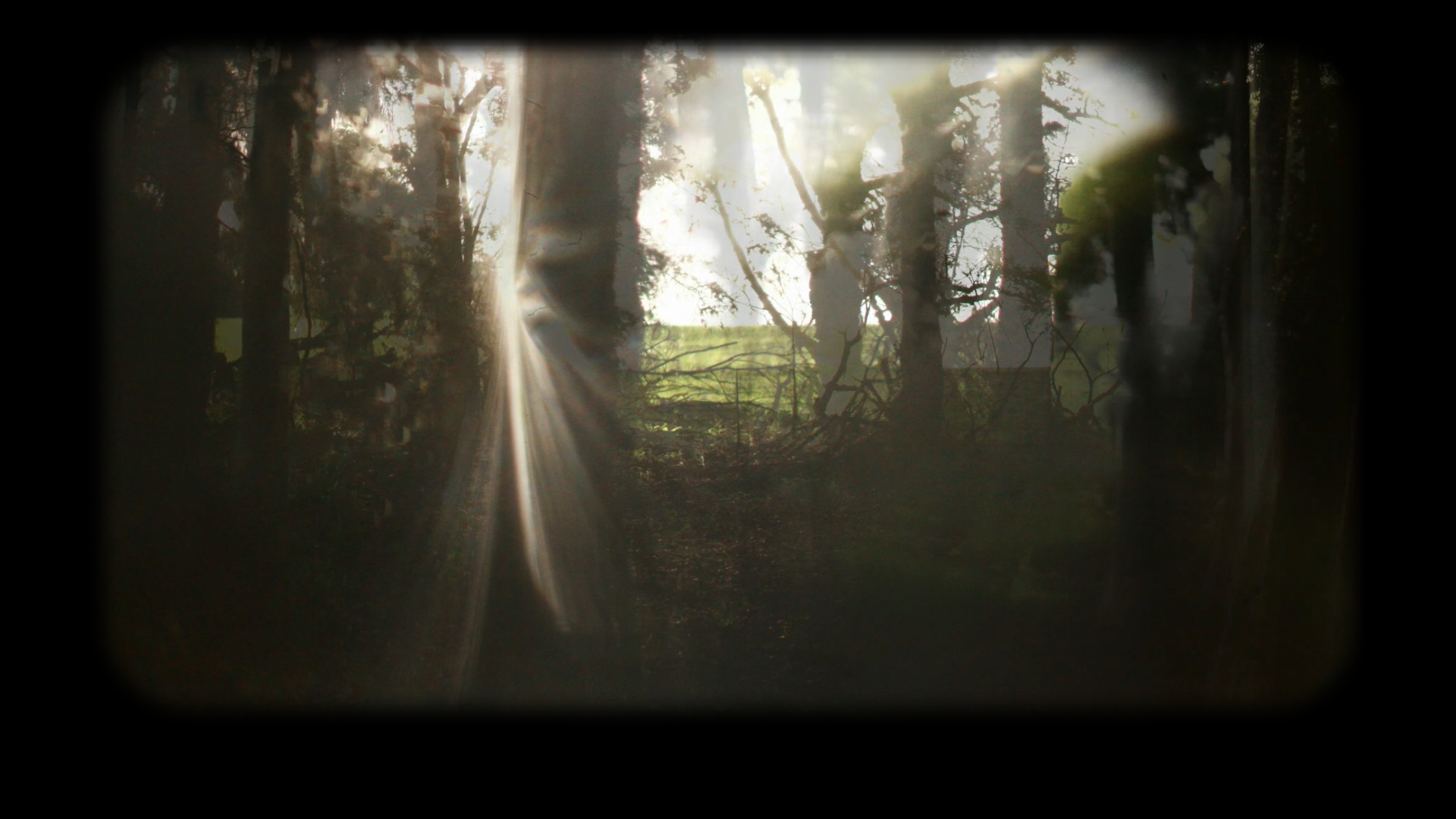
The Commons by Willo Drummond
Something I learned while researching this question sent me down many late-night rabbit holes: when you encounter your favourite passage of poetry, the same regions of your brain light up as when you hear a piece of music that gives you chills. You know the feeling: that tingling at the back of your neck, the goosebumps, the sense that something has reached inside you and touched a place that language can’t quite name.
Which means that what we’re doing with these poetry films ~ combining words, images and sound ~ is basically lighting up the entire Christmas tree in people’s brains.
This was either very encouraging or deeply alarming, depending on how you looked at it.
Let me back up. For the past few months, we’ve been working on Vessels of Love 2026, Poetry Sydney’s annual program exploring love during Valentine’s week. Seven poets, seven films. The theme this year is love’s forces of abundance and decay, which sounds rather grim until you realise that these two things are inseparable, really. Part of the same cycle. One descending into the other.
But what I want to talk about here isn’t so much what we’ve made, though I’m so proud of it. What I want to talk about is the question that’s been keeping me up at night: what happens to a poem when you add pictures to it?
And music?
Are we enhancing the experience, or are we (and I’ve lost sleep over this as well) mucking about with something that didn’t need fixing in the first place?
The question reminds me ~ and I promise this digression has a point ~ of something that we discussed a lot when we first started this project. People already see things when they read poetry. That’s the whole point, isn’t it? You give them words and their brain does the rest. So why would we want to take that away from them?
It was a fair question. A troubling question, actually.
Here’s what I’ve learned: when you read a poem, you’re already translating it, from the poet’s imagination into your own. What we’ve done is make our translation visible. And audible.
Research on how different people respond to the same poem found huge variation in the mental imagery people formed. Different readers visualised the same words completely differently, and these internal images affected their emotional responses to the work. There is no single ‘correct’ vision of a poem living in readers’ heads that we might be overriding. There are infinite versions.
So the question isn’t whether we’re interfering with imagination. The question is whether our particular translation amplifies the experience or simply replaces one vision with another.
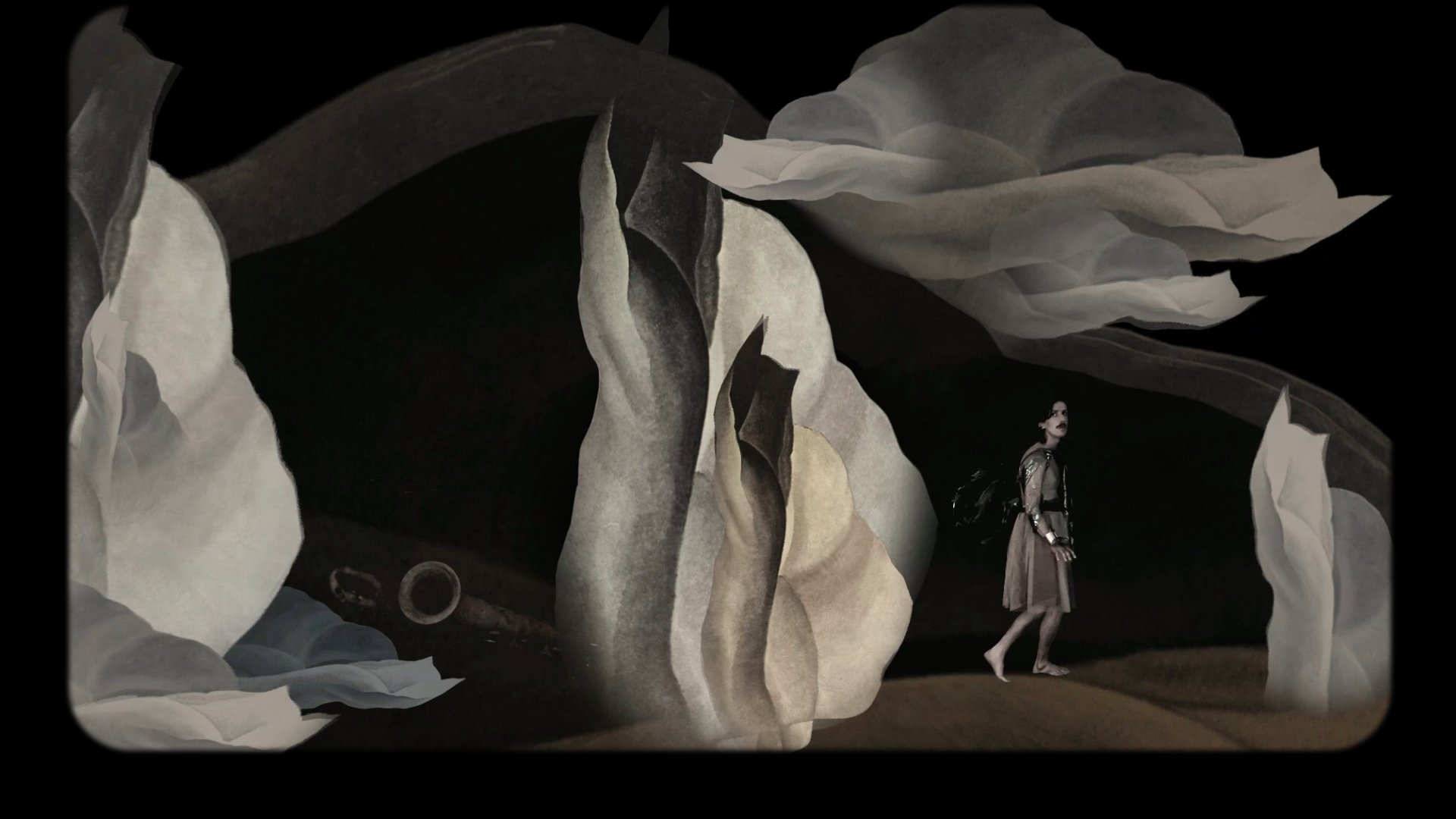
æther by Ethan Price
There’s a theory in psychology called dual coding theory. Your brain has two separate but connected systems for processing information: one for words, one for pictures. When both systems engage at once, you get what researchers call a ‘dual code advantage’, a clinical way of saying you remember things better when there are pictures involved. Your brain creates richer, more interconnected memory traces. Like having two different maps to the same destination.
But here’s the fascinating bit, at least for us making these films. When you read evocative language, the kind that poetry excels at, your brain spontaneously generates visual imagery anyway. The neural systems involved in reading ‘the moon hung like a lantern over the water’ are apparently the same systems involved in actually seeing a lantern over water. Poets have been hacking the visual cortex for centuries, long before anyone had heard of a cortex.
So, when we add actual moving pictures to poems, we’re offering a specific visual track to run alongside the verbal one. We’re not creating the dual code, the poem already does that. We’re making the visual code explicit, shared, collaborative rather than private.
Whether this enhances or constrains the experience depends, I suspect, on the relationship between word and image. This sent me down more rabbit holes and more sleepless nights.
Which brings me to a distinction that became increasingly important as we worked: the difference between a poetry film and a short film. When we started this project, someone asked, quite reasonably, “So you’re making short films with poetry in them?” And I said yes, because it was easier to say than try to explain that there was a whole school of thought around poetry films, and the fact we’d spent three years debating ways to amplify poetry without drowning it.
But as it turns out, that was the wrong answer.
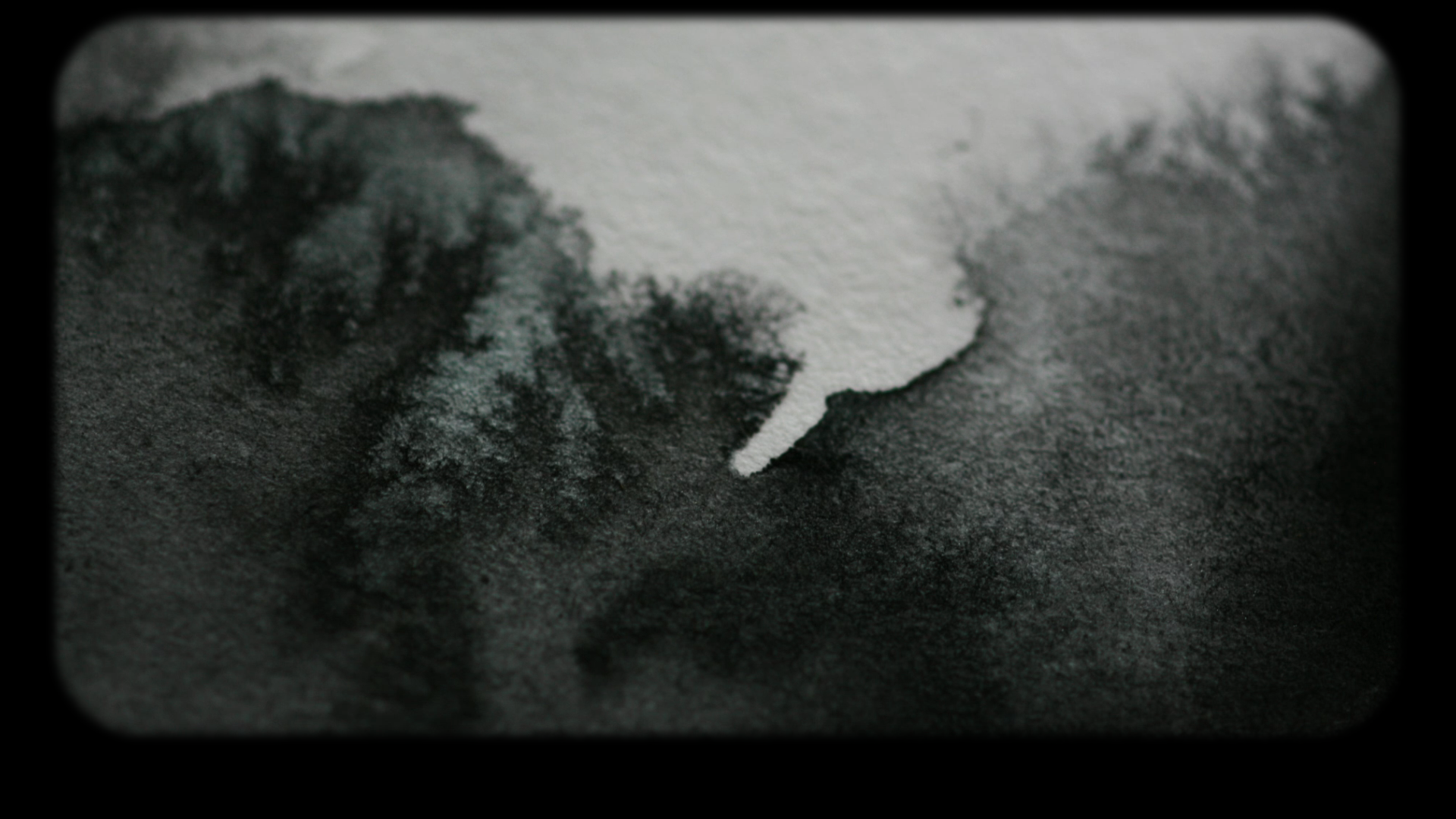
A Day on Hiva Oa by Martin Edmond
In a conventional short film, the arc, the story ~ the emotional journey ~ lives primarily in the images. The pictures drive everything forward. But in what we’ve created, the relationship works differently. The arc lives in the words. The images and sound create layers that work with the poem, building something that exists as a whole ~ not illustration, not decoration, but a unified experience where each element amplifies the others.
The images we’ve made don’t explain the poems or illustrate them literally. They create ~ and this is how I’ve started thinking about it ~ an atmosphere, a visual texture that allows the poetry to resonate differently. To land in a different part of your brain, perhaps.
Now, several of our films also have musical scores, which opened up an entirely new realm of possibility and peril. Because music, it turns out, does something quite extraordinary to poetry.
The power of art and music to move us, emotionally, spiritually and physically, has been discussed in both Eastern and Western philosophy for millennia (yes, millennia ~ I checked).1 What researchers at the University of Exeter have added to this ancient conversation is the mechanics: when you listen to poetry read aloud, particularly passages that move you, the same brain regions associated with memory and emotion activate as when you listen to music.
When you combine poetry with music, you create what amounts to triple encoding.2 The meaning of the words, the rhythm and meter, and then the musical elements themselves, all activating different but overlapping regions of the brain.
But, and this is crucial, get the music wrong and you’ve ruined everything. Drown out the words’ own rhythms, tell people how to feel before the poem has had a chance to work its way in, and you’ve made a manipulative film soundtrack rather than a poetry film.
What we needed was music that weaves in and out, supporting rather than overwhelming. Another layer in the whole.
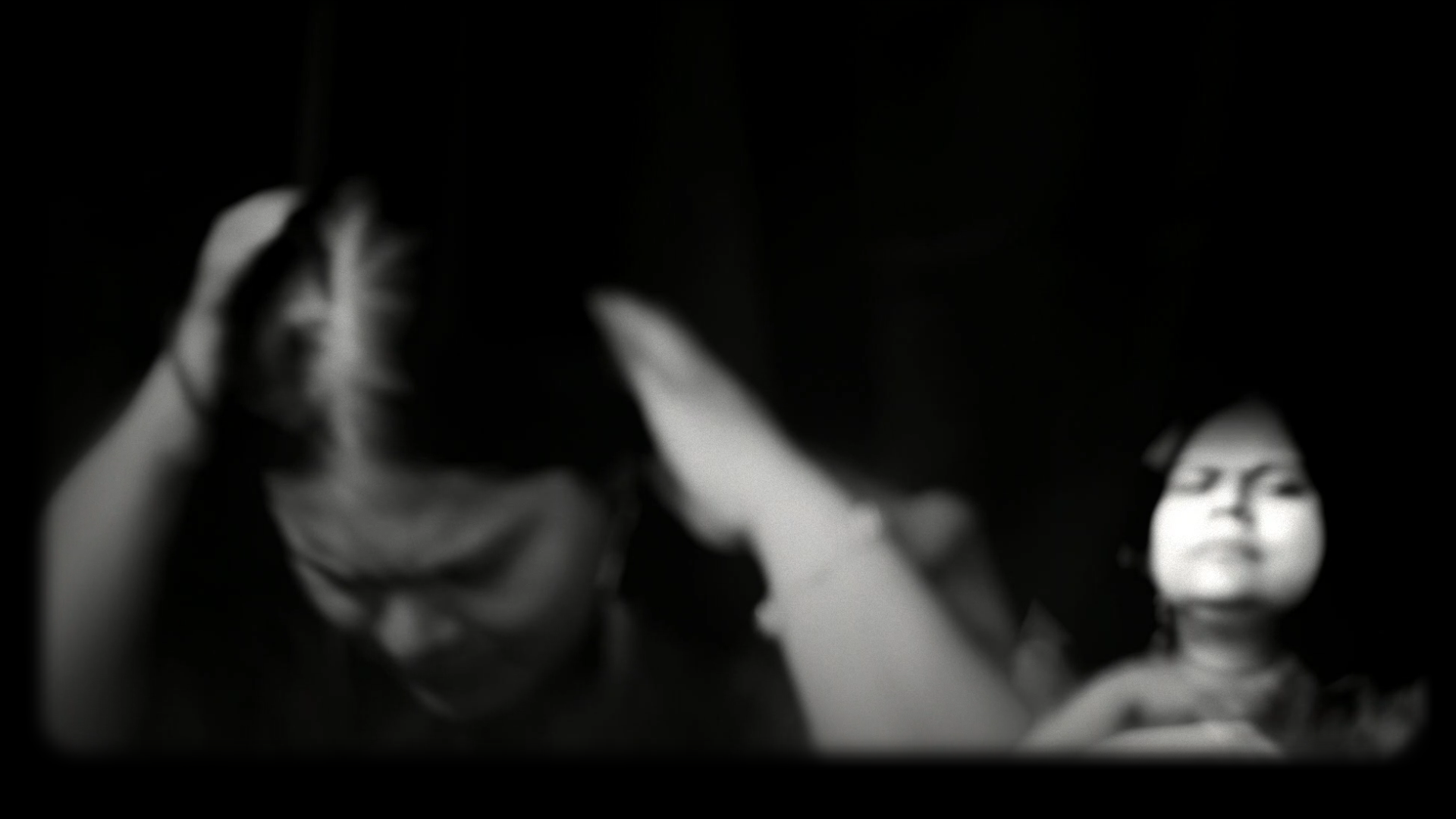
Murder / suicide by Pooja Mittal Biswas
So what we’ve created over the years, really, is an experiment. We’re offering a particular translation of each poem into the languages of image and sound. One way to see it, one way to feel it. It might align with what forms in your mind when you read the words, in which case you’ll feel recognition, amplification. Or it might offer a completely different vision, shifting your relationship to the poem in ways neither of us anticipated.
I’ve been thinking about this through the lens of some research on how different people respond to the same poem. Scholars studying readers’ reactions to various translations found huge variation in the mental imagery people formed. Different readers visualised the same words completely differently, and these internal images affected their emotional responses to the work.
Which suggests that when we read a poem, we’re already translating it from the poet’s imagination into our own. What we’ve done is make our translation visible. And audible. Whether this enhances the experience or changes it into something else entirely is, I suspect, a question with a different answer for each person who watches.
And I’ve made my peace with that uncertainty, I think.
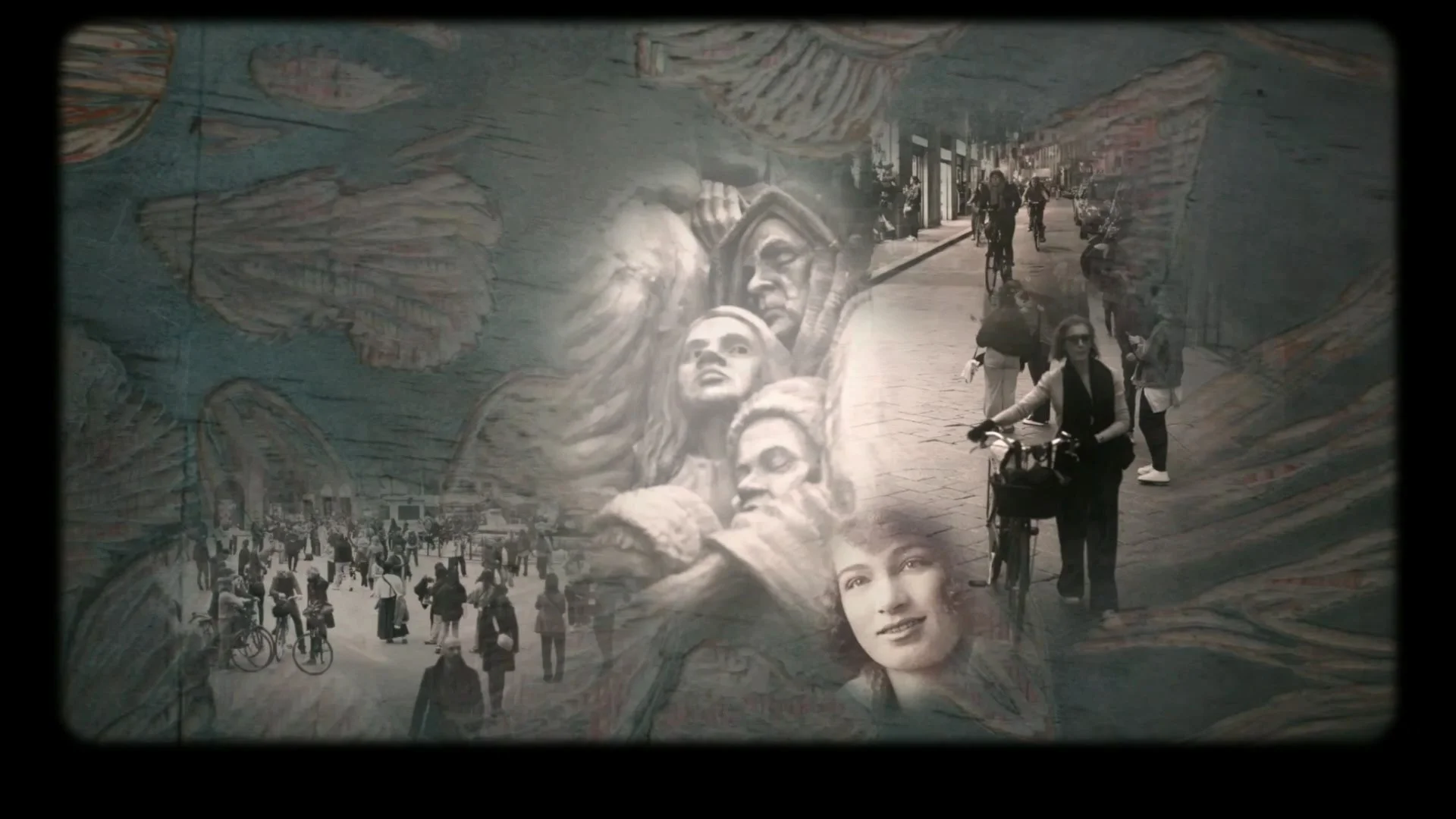
Challenge by Minnie Agnes Filson
The poets we’ve worked with have been extraordinarily generous. This year, there’s Willo Drummond, whose work moves through The Commons like a meditation on collective space and loss. Ethan Price, who collaborated with Deby Cann on æther, bringing his music background to bear on the work. Michele Seminara with A Typewriter Guilty with Love, exploring the mechanics of writing and desire. Martin Edmond’s A Day on Hiva Oa, carrying us on a meditation of life. Faye Couros, with Why Blackbirds Sing, weaving gothic folktale with ecological awareness. Pooja Mittal Biswas’ Murder / Suicide, which doesn’t flinch from the violence love can contain. And perhaps most movingly, Challenge, by Minnie Agnes Filson, a poet who lived from 1898 to 1971, bed-bound with rheumatoid arthritis, writing under the pseudonym Rickety Kate.
Their films occupy what we’ve described as ‘the space between what love is and what it does ~ between symbolism and lived experience, memory and fiction, the personal and the mythic’. We chose abundance and decay as our theme because these aren’t opposites: each gives the other meaning. Each makes the other possible. Rather like words and pictures, now that I think about it. Or poetry and music. Or the way your brain processes experience ~ through multiple channels at once, weaving them together into something unified.
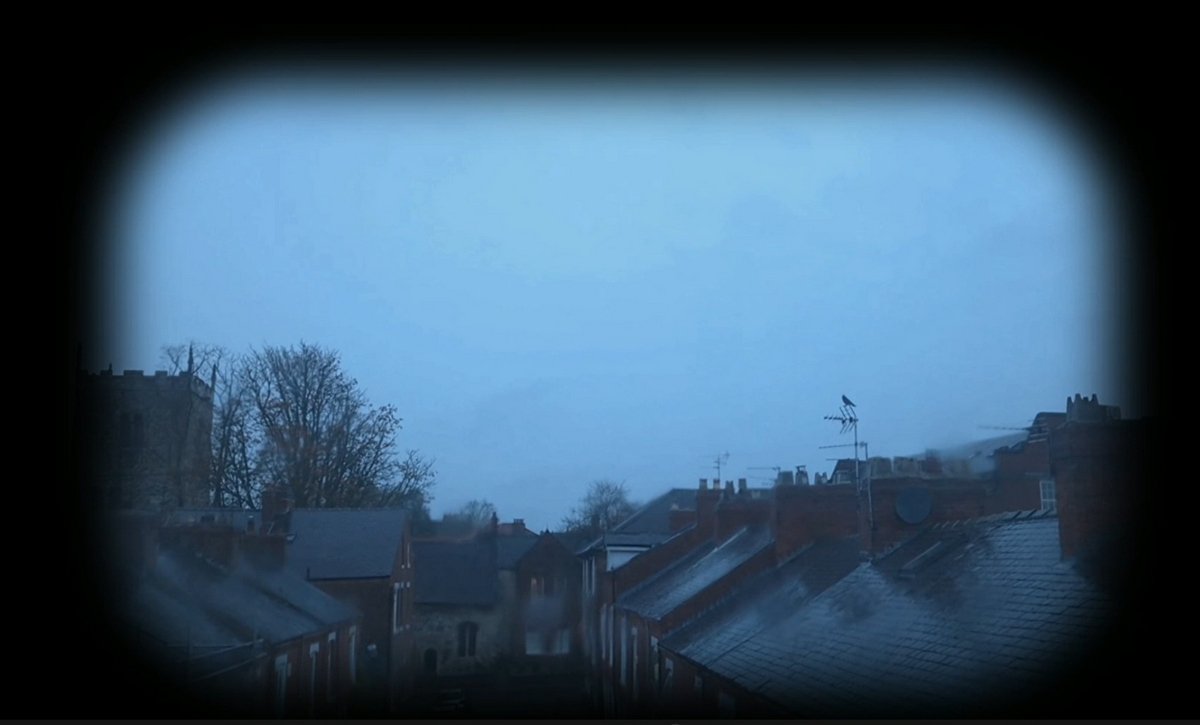
Why Blackbirds Sing by Faye Couros
Research on what’s called ‘multisensory integration’ suggests that this is what happens with these kinds of works. The combination of verbal, visual and auditory elements creates deeper, more interconnected memory traces. The nucleus accumbens ~ your reward centre ~ apparently lights up like a pinball machine when you encounter something beautiful and meaningful and a little overwhelming.
But what about people who don’t visualise when they read? People with aphantasia, the inability to create mental imagery?3 From what I understand, they experience reading differently. Less visual engagement, certainly. But they still appreciate the meaning, the story. They just access it through different channels.
Which made me realise that by providing specific visuals, we’re amplifying the experience for some people while potentially limiting interpretations for others. You gain something ~ the triple encoding, the chills, the richer memory traces, the beauty of seeing one particular vision of these works. But you might lose something too ~ the infinite possibility of your own imagination.
There’s always a trade-off.
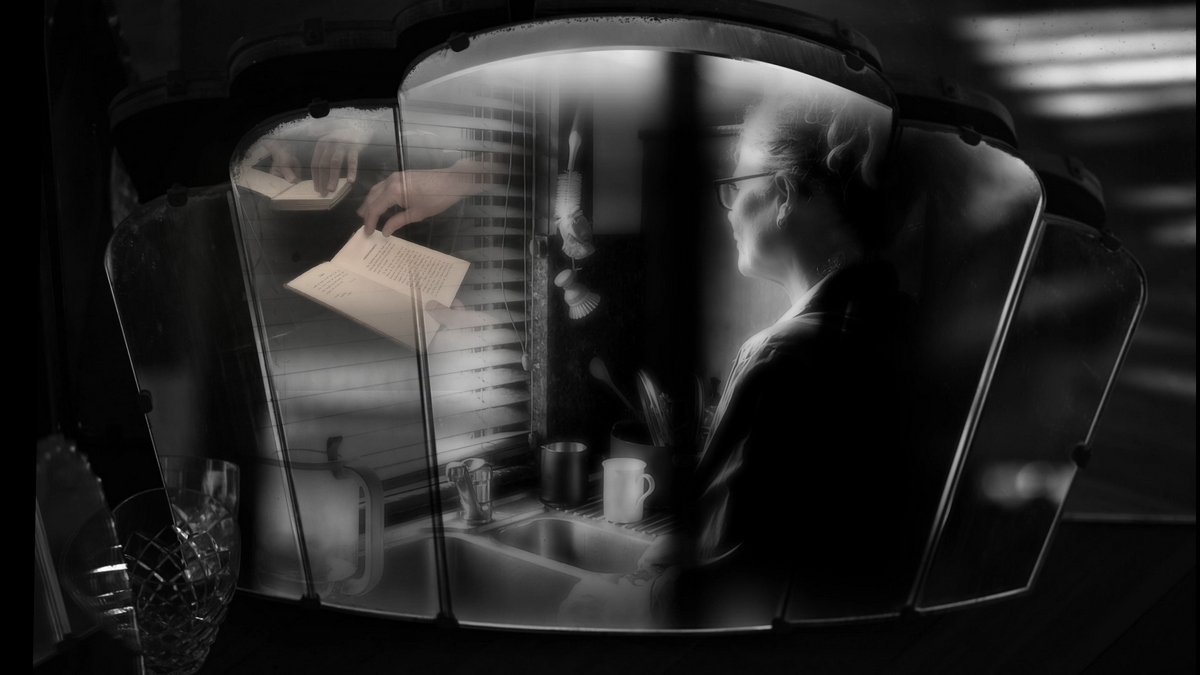
A Typewriter Guilty with Love by Michele Seminara
And that’s the risk we’ve taken, I suppose. The risk anyone takes when they translate a private experience ~ reading a poem, hearing it in your head, seeing the images it conjures ~ into a public one. We’re hoping that what you gain is worth what you might lose.
I don’t know if we’re right. I suspect it depends on the poem, the film, the person watching, their mood that day, what they’ve brought with them into the viewing. Which is another way of saying it depends on everything, really.
But I do know this: the attempt felt worth making. Because what we’re really asking, what poets have been asking for thousands of years, is: how do you take something as vast and complicated and contradictory as love, in all its abundance and decay, and make it visible? How do you make it shareable? How do you take what’s inside one person and bring it into the space between people?
The answer, we’ve discovered, involves neuroscience we barely understand, filmmaking that required more trust than certainty, and a willingness to risk that what we create might not be quite what anyone imagined ~ not us, not the poets, not you.
But isn’t that always the case with love? You start with one vision, one intention, and it becomes something else entirely in the making. Something you couldn’t have predicted. Something that exists in the space between what you meant and what actually happened.
That’s what these seven films are, in the end. They’re what happened when we added pictures and sound to poetry, when we took something private and made it public, when we risked overriding imagination in the hope of amplifying it instead.
Whether we’ve succeeded ~ well, that’s for you to decide.
Come see what we’ve made. Tell us if we’ve mucked it up or if we’ve gotten it right. Tell us what you saw, what you felt, whether the pictures matched what formed in your mind or surprised you entirely.
Tell us if your nucleus accumbens lit up like a pinball machine.
We’re genuinely curious.
The films are all available to watch online. You can also find selected works around Sydney: at Knox St Bar, Chippendale for Poetry Sydney’s Exhibition Program (featuring the Poem Phone and Poetry Gallery), Arts Friday on Eastside FM and Intelligent Animal’s DIP window gallery in Darlington.
We’ll be there, watching people watch them, wondering what’s happening in their brains, hoping the Christmas tree lights up.
AND FOR THOSE OF YOU WHO WANT MORE…
Fil Ieropoulos, whose specialist area is the relationship between film and poetry, provides a useful literature review of poetry film as a form.
Here are some of the findings from the Wassiliwizky et al. 2017 study on emotional responses to poetry.
THE MAIN DISCOVERIES
Poetry literally gives you goosebumps. This study used fMRI neuroimaging, psychophysiology measurements and behavioural responses to show that recited poetry can trigger ‘chills’ ~ objectively measurable goosebumps (piloerection) along with that spine-tingling feeling. This engages the same primary reward circuitry in your brain as music does.
The nucleus accumbens ~ your reward centre ~ works differently for poetry and music. While both poetry and music activate reward pathways, the nucleus accumbens (NAcc) shows a unique pattern with poetry. It increases activity during the anticipation of the chill (the ‘prechill’), peaking right when the chill hits, then returning to baseline during the actual experience. This is different from music.
The beautiful paradox: pleasure mixed with sadness. Here’s what I find most compelling: researchers found that the peak aesthetic pleasure can co-occur with physiological markers of negative affect. They measured facial muscle activity (corrugator ~ the frowning muscle) and found it was more active than the smiling muscle (zygomaticus) during chills. So poetry-induced chills often happen when you’re feeling sad or moved in a bittersweet way, not just happy.
This validates what Friedrich Schiller4 described as ‘the mixed sentiment of suffering and the pleasure taken in this suffering’ ~ what we call ‘being moved’.
Poetry’s goosebump effect works even if you’re not a poetry person. In the first study, 100% of poetry enthusiasts experienced chills. Remarkably though, in a follow-up with people who were ‘naïve regarding poetry’ (not regular readers), 77% still experienced chills to unfamiliar poems. This contradicts the assumption that you need familiarity with a stimulus to get chills from it.
Where and when the chills happen reveals compositional principles. The researchers created heat maps showing exactly which words in poems triggered chills. The patterns revealed that chills tend to cluster at—
the end of entire poems
the end of individual stanzas
the end of individual lines.
This suggests closure effects are crucial to poetry’s emotional power, that sense of resolution or arrival.
Chills make memories stick. The study notes that chills and goosebumps enhance the memorability of the stimulus. Participants easily remembered the exact passages of poems that gave them chills ~ just as people remember specific moments in music or films that moved them.
The bodily experience matters. Heightened activity in the mid insula (which plays a key role in interoceptive awareness ~ your sense of your own body states) during chills suggests there’s a strongly felt bodily component to the aesthetic experience of poetry.
WHY THIS MATTERS
This research validates exactly what we’re doing with Vessels of Love. By combining poetry with visuals and sound, there is the potential that we are—
creating multiple pathways to that reward circuitry activation
enabling different forms of ‘anticipation’ that could trigger the nucleus accumbens
allowing for that beautiful paradox of pleasure mixed with sadness (abundance and decay!)
creating more memorable experiences through multisensory engagement.
FOOTNOTES
1 Yes, millennia! Plato was writing around 380 BCE (his Republic where he discusses art and emotion) and Aristotle around 335 BCE (his Poetics where he discusses catharsis). That’s roughly 2,400 years ago. So “millennia” (plural) is accurate and appropriate. Eastern philosophy discussions about art and emotion go back even further—
Indian aesthetics and the concept of ‘rasa’ (emotional flavours evoked by art) appears in the Natya Shastra (dating somewhere between 200 BCE and 200 CE)
Chinese philosophy discusses music and emotion in texts like the Yueji (Record of Music), part of the Classic of Rites, dating to around 200 BCE or earlier
across cultures, the conversation about art’s power to move us emotionally has been going on for well over two millennia across multiple cultures.
2 Triple encoding is my term, not one from the research literature. It’s a logical extension of dual coding theory, the addition of music creating a third channel, and it’s my interpretation.
3 Aphantasia is a cognitive variation characterised by the inability to voluntarily create mental images in the ‘mind’s eye’, affecting roughly 1-4% of people. It is not a disorder, but a different way of experiencing the world, often involving the absence of visualisation for memories, future planning, or imaginary scenes. Research by Keogh and Pearson (2018, The blind mind: No sensory visual imagery in aphantasia, Cortex, 105, 53-60) shows that people with aphantasia experience reading and memory formation quite differently yet still engage deeply with narrative and meaning.
4 Friedrich Schiller wrote Ode to Joy (An die Freude), which Beethoven later used in his Ninth Symphony. As a philosopher, Schiller wrote extensively about aesthetics, the philosophy of beauty and art. Deeply influenced by Immanuel Kant, he developed his own theories about how beauty relates to morality, the role of art in society, the nature of aesthetic experience, and the concept of the ‘beautiful soul’ (schöne Seele) ~ a person whose emotions have been educated by reason. Schiller’s key aesthetic ideas and treatises included—
On Naïve and Sentimental Poetry (1795-96). He distinguished between two types of poetry ~ ‘naïve’ (direct, spontaneous, unified with nature) and ‘sentimental’ (reflective, aware of the gap between ideal and reality). This essay influenced Romanticism and is still (I am told) studied in literary theory.
Letters on the Aesthetic Education of Man (1794). Schiller argued that aesthetic experience could heal the fragmentation of modern life and help people become fully human. Art wasn’t just decoration ~ it was essential to human development.
The concept of ‘being moved’. Schiller wrote about how aesthetic experience combines pleasure with pain, joy with sadness ~ exactly what the Wassiliwizky study was measuring when they found frowning muscles activating during poetry-induced chills. Schiller called this “the mixed sentiment of suffering and the pleasure taken in this suffering.”
Why Schiller deserves his own footnote ~ that quote about ‘suffering and pleasure’ perfectly captures what the neuroscience is now proving: that the most powerful aesthetic experiences aren’t pure joy. They’re complex, bittersweet, mixing beauty with sadness. Which is exactly what we are exploring through ‘abundance and decay’.
Schiller believed art could transform people and society. He saw aesthetic experience as a kind of freedom ~ a space where humans could transcend their limitations. What’s remarkable isn’t that Schiller was thinking about this in the 1790s, but rather how prescient his insights were regarding neuroscience’s later discoveries; the ways art activates our reward systems and creates lasting memories.
5 A tilde (~) is a character with a rich history, originating as a medieval scribal abbreviation. And for those of you who view em dashes (or characters resembling them) with suspicion, I have two words: Emily Dickinson!
STUDIES
A note on the studies and information referenced below ~ some of these papers are freely available online, while others require institutional access (I’ve provided DOI links where relevant: and no, I didn’t read these DOI linked studies, I came across them second-hand as I was searching for more information). This isn’t an academic paper ~ it’s the writing of someone who went down a lot of rabbit holes trying to understand what happens when you add images and sound to poetry. The field moves quickly, so some studies may have been built upon or refined since publication, yet they are what I have based the content of this newsletter on. If you are an expert in the field, reach out ~ we’d love to learn more.
FREELY AVAILABLE
Wassiliwizky, Koelsch, Wagner, Jacobsen and Menninghaus (2017) The emotional power of poetry: Neural circuitry, psychophysiology and compositional principles Social Cognitive and Affective Neuroscience, 12(8), 1229-1240
Zeman, Milton, Smith and Rylance (2013) By heart an fMRI study of brain activation by poetry and prose Journal of Consciousness Studies, 20(9-10), 132-158
REQUIRES INSTITUTIONAL OR LIBRARY ACCESS
Clark and Paivio (1991) Dual coding theory and education Educational Psychology Review, 3(3), 149-170
Dijkstra, Bosch and van Gerven (2019) Shared neural mechanisms of visual perception and imagery Trends in Cognitive Sciences, 23(5), 423-434
Kosslyn, Thompson and Alpert (1997) Neural systems shared by visual imagery and visual perception: A positron emission tomography study NeuroImage, 6(4), 320-334
Liu (2023) Mental imagery and poetry The Journal of Aesthetics and Art Criticism, 81(4), 428-439
Nelson, Reed and Walling (1976) Pictorial superiority effect Journal of Experimental Psychology: Human Learning and Memory, 2(5), 523-528
Paivio (1979) Imagery and verbal processes New York: Psychology Press
Paivio and Csapo (1973) Picture superiority in free recall: Imagery or dual coding? Cognitive Psychology 5(2), 176-206